Ultra-High Precision SLA Resin 3D Printing
Achieve flawless surface finishes and intricate details with our professional SLA 3D printing. From industrial prototypes to complex design models, we deliver uncompromising accuracy in the heart of Yokohama.
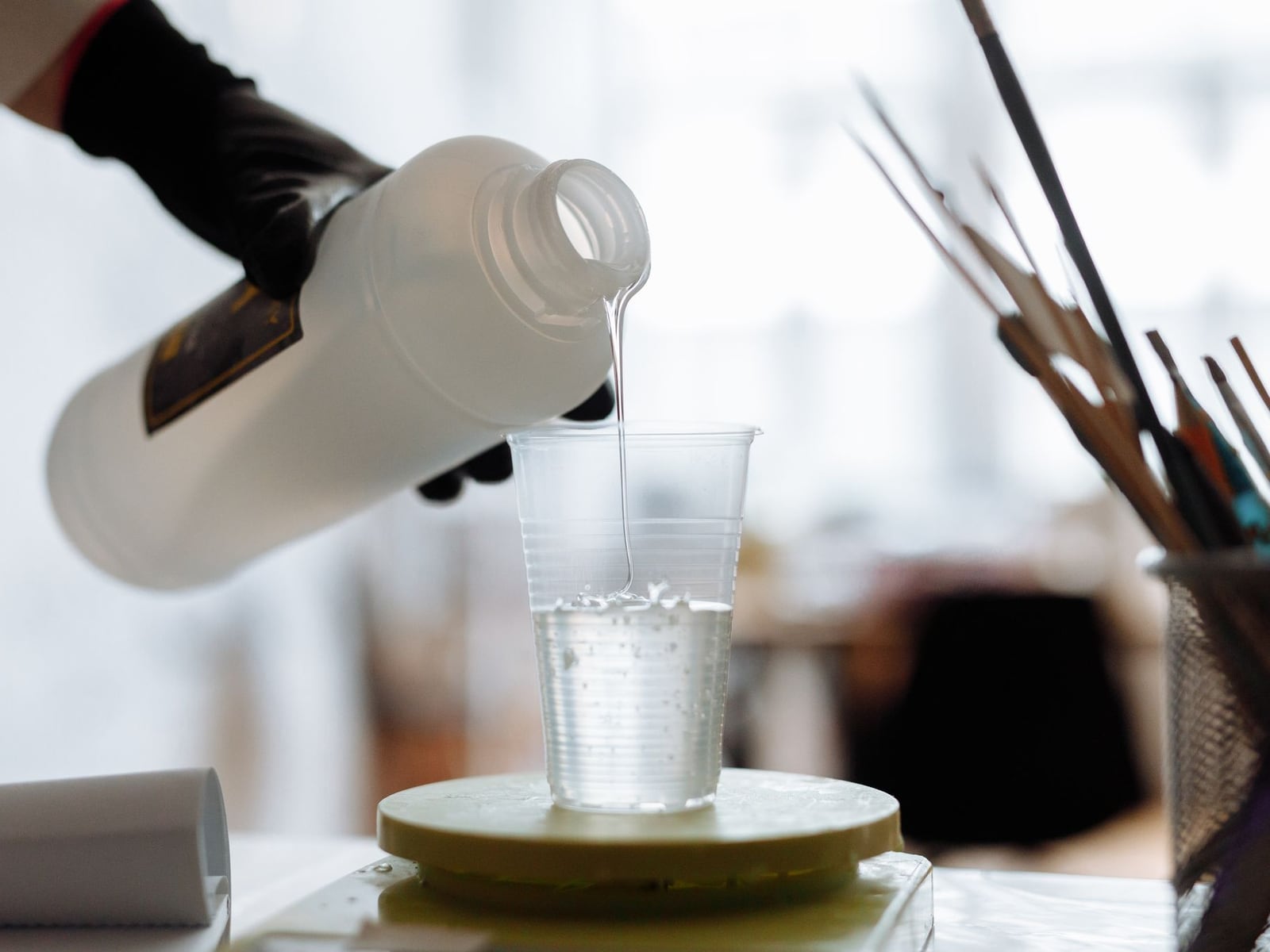
Stereolithography (SLA) is an advanced additive manufacturing technology that uses an ultraviolet laser to cure liquid photopolymer resin layer by layer. Unlike FDM printing, SLA produces parts with virtually invisible layer lines, resulting in an exceptionally high visual quality. This makes it the ideal choice for components requiring micron-level precision or models with highly complex internal geometries.
At Jubilantdrive, we utilize industrial-grade resin materials, managed by experienced engineers at our Yokohama studio. Our expertise extends beyond simple printing; we optimize every stage of the workflow—from support removal to chemical washing and secondary UV curing—to ensure maximum dimensional stability and surface smoothness for every single part.
Our SLA Production Process
Data Analysis & Optimization
We analyze your STL or STEP files to determine the optimal build orientation and support structure placement. We verify that wall thicknesses and minimum hole diameters meet SLA technical specifications.
Precision Printing
After filling the vat with the selected resin, the UV laser begins the layering process. We strictly control ambient temperature and humidity to minimize distortion and ensure the highest possible accuracy.
Washing & Post-Curing
Once printed, parts are cleaned using Isopropyl Alcohol (IPA) to remove all uncured resin. They then undergo secondary curing in a UV chamber to lock in the material's final strength and hardness.
Finishing & Quality Control
Supports are carefully removed, and contact points are smoothed. We verify that the part adheres to our tolerance of ±0.2mm before securely packaging the item for shipment.
Who is this service for?
Our SLA service is specifically designed for projects where "visual perfection" and "dimensional precision" must coexist. Typical applications include final-stage exterior models for product development, jewelry master patterns, visual aids for dental or medical fields, and intricate urban models for architects.
We also recommend SLA for engineers who need to produce sharp edges or extremely thin walls that are impossible to replicate with FDM technology. Whether it is a functional prototype for fit-testing or a high-quality sample for a trade show, our resin printing provides the professional finish required for high-stakes presentations.
Client Preparation & Requirements
To ensure a smooth production cycle, we ask clients to prepare the following data and information. 3D models should be provided in STL or STEP format. To avoid scaling errors, please ensure the data is explicitly defined in millimeters (mm).
If there are specific areas where precision is critical, please provide a technical drawing or a detailed note. If you are unsure which material to use, please refer to our Guide to Choosing the Right Material or describe your requirements (e.g., heat resistance, transparency), and our engineers will suggest the optimal resin.
Deliverables and Final Results
You will receive a fully post-cured part with all support structures professionally removed. Before shipping, we take high-resolution photographs of the finished object and send them via email for your approval, ensuring the result meets your expectations before it leaves our studio.
If we provided 3D modeling services as part of your order, the final STL/STEP files will be delivered upon full payment. All parts are packed using heavy-duty cushioning materials to prevent any damage during transit.
Lead Times and Scheduling
Our average prototype lead time is 3 to 5 business days. This timeframe includes data verification, printing, washing, curing, and final inspection. Please note that for very large parts or those with an extremely high number of layers, the print time itself may increase; in such cases, we will provide a custom timeline.
For urgent projects, we offer "Express Processing." We prioritize your order in our production queue for an additional urgent fee of 30%. Please discuss your specific deadline during the initial inquiry to confirm availability.
What we do NOT print
For safety and legal compliance, Jubilantdrive refuses the fabrication of the following items: weapons or weapon components, medical implants or devices intended for internal human use, critical safety components for aerospace or automotive industries that require legal certification, and copies of models that infringe upon third-party copyrights or trademarks.
If a submitted file violates these standards, we will decline the order during the data review stage. We appreciate your understanding in maintaining these safety and legal boundaries.
Pricing Logic and Consumption Tax
SLA printing costs are primarily calculated based on the volume of resin used (per gram). Additionally, a base fee based on total print time and a labor fee for complex support removal may be applied depending on the geometry of the part.
All prices are listed in accordance with Japanese law, with the consumption tax (消費税) of 10% shown separately. For B2B clients with a corporate contract, we support payment terms of up to 30 days after invoice issuance. The minimum order amount is 3,000 JPY.
What is included in the SLA service
- High-resolution 3D printing using professional resins
- Precision cleaning using Isopropyl Alcohol (IPA)
- Secondary UV curing for material stability
- Support removal and basic contact point smoothing
- Pre-shipment inspection and photographic status report
- Secure packaging with protective cushioning
Pricing Table
| Plan | Unit Price (Excl. Tax) | Unit Price (Incl. Tax) | Unit |
|---|---|---|---|
| Standard Resin | 409円 | 450円 | per 1g |
| High-Detail Resin | 545円 | 600円 | per 1g |
※ Minimum order: 3,000 JPY. Additional adjustment fees may apply based on size or complexity. Please refer to our Terms of Service for more details.
Frequently Asked Questions about SLA
What are the advantages of SLA compared to FDM?
The primary advantages are surface smoothness and extreme detail. Layer lines are nearly invisible, and we can achieve tolerances as tight as 0.2mm. SLA is also far superior for producing complex geometries and thin-walled parts that would collapse during FDM printing.
Is the material strength sufficient for functional parts?
SLA resins offer high hardness and excellent shape retention, but they tend to be more brittle than some industrial thermoplastics used in FDM. Depending on your needs, choose between Standard or High-Detail resin. For high-impact strength, we recommend considering FDM ABS.
Can you help with modifying my 3D data?
Yes, we can. Through our 3D Modeling service, we offer data optimization and design changes. This service starts from 8,000 JPY (incl. tax) per hour. Please contact us for a specific estimate.
Can the printed parts be painted after delivery?
Absolutely. Because SLA parts have a smooth surface, they are ideal for painting. We offer a "Post-processing & Finishing" service that covers everything from professional sanding and priming to full-scale custom painting.