Manufacturing Strategy / Reading Time: 5 min
Prototype vs Small Series Production: A Roadmap for Efficient Product Development
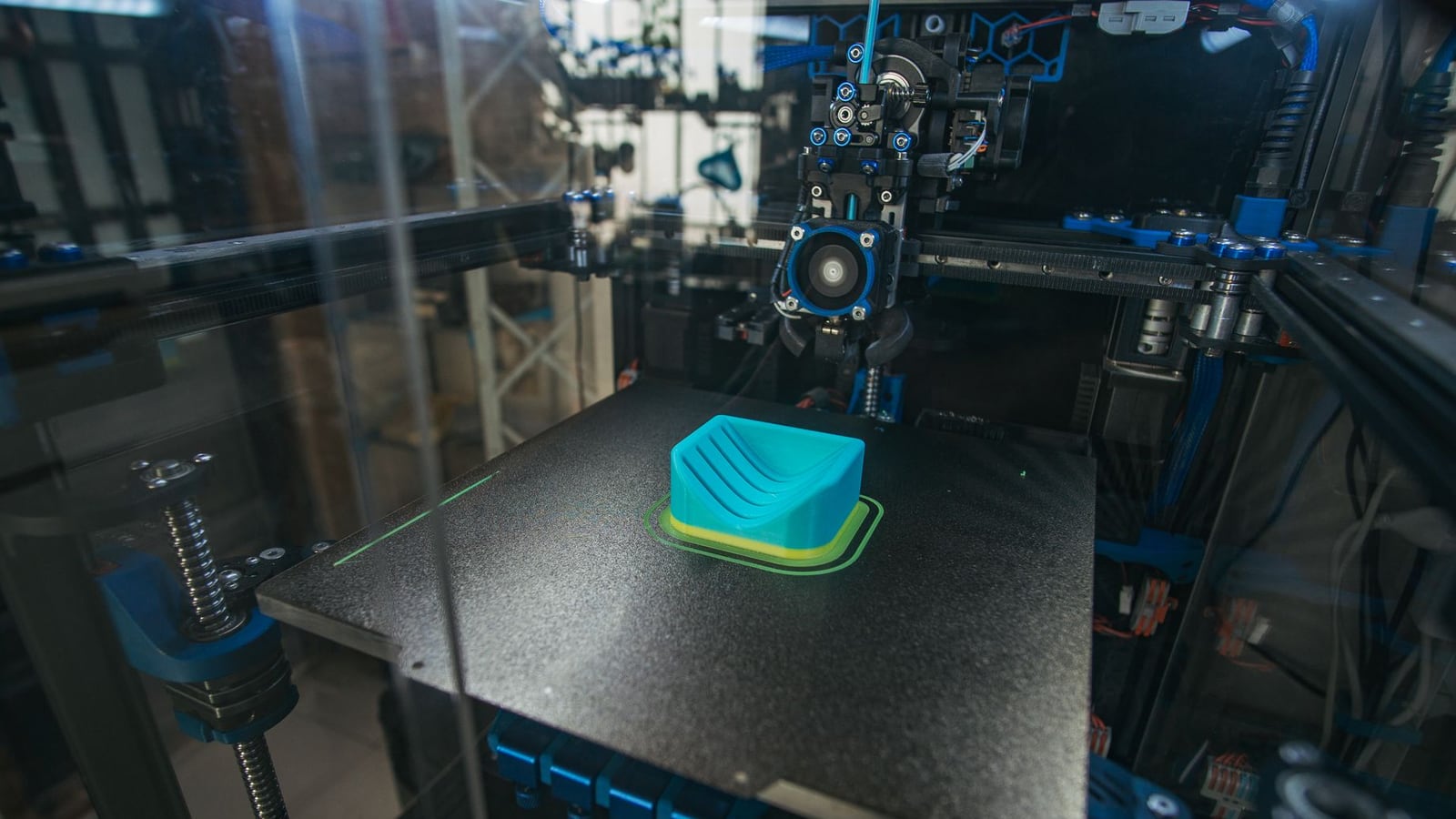
In the product development lifecycle, there is a fundamental difference between prototyping—the act of "making it tangible" to test an idea—and small series production, which is about creating functional units for actual use or sale. Misunderstanding this boundary often leads to inflated costs, missed deadlines, or the delivery of a product that fails to meet real-world requirements.
For startups, engineers, and design firms operating in Yokohama's Nishi-ku district, knowing exactly when to shift your manufacturing approach is critical. This guide outlines the criteria for transitioning from a "test" mindset to a "production" mindset.
1. The Purpose of Prototyping: Validation and Iteration
The primary goal of a prototype is to "fail fast and fail cheap." Using 3D printing for prototyping allows developers to conduct three main types of validation:
- Form Study (Visual Validation): Checking the ergonomics, overall size, and aesthetic balance of the object.
- Fit Check (Functional Validation): Ensuring the part integrates correctly with other components and that moving parts operate as intended.
- Proof of Concept (PoC): Proving that a theoretical idea can be physically realized.
At this stage, surface roughness and minor dimensional deviations (within the Jubilantdrive tolerance of ±0.2mm) are generally acceptable. The priority is speed and cost-efficiency over perfection.
2. The Purpose of Small Series Production: Utility and Supply
Conversely, small series production (typically ranging from a few dozen to a few hundred units) focuses on providing a "frozen design" that is ready for the end-user. Here, the elements that were compromised during prototyping become paramount:
- Consistent Quality: Every single unit must maintain the same dimensions, strength, and structural integrity.
- Surface Finishing: As the product will be handled by users, professional post-processing such as sanding and painting is essential.
- Durability and Environmental Resistance: Selecting materials and print settings that can withstand the intended operating environment (e.g., high temperatures or outdoor exposure).
3. Decision Criteria: When to Switch to Production
The transition to small series production should occur only when the frequency of design changes drops to nearly zero. Use the following checklist to evaluate your current stage:
| Criteria | Prototyping Stage | Small Series Stage |
|---|---|---|
| Design Change Probability | High (Frequent iterations) | Extremely Low (Design frozen) |
| Required Precision | General fit is sufficient | Strict tolerance management |
| Surface Condition | Layer lines are acceptable | Professional finish required |
| Quantity | 1–3 units | 10–hundreds of units |
4. Shifting Material Strategies
While easy-to-print materials like PLA are preferred for rapid prototypes, small series production requires materials tailored to the application. For industrial jigs, high-strength ABS or PETG is the standard; for high-precision architectural models, specialized resins are used.
For developers in Nishi-ku, Yokohama, the most efficient cycle involves receiving a rapid sample to verify the "feel" of the part locally before committing to a full small-batch order, thereby reducing shipping overhead and risk.
5. The Critical Role of Post-Processing
In small series production, shipping parts in their "raw" 3D-printed state is rare. To add commercial value and professional appeal, we strongly recommend our post-processing services. By removing layer lines through sanding, applying primers, and executing full professional painting, we can achieve an appearance that closely mimics injection-molded plastics.
6. Understanding the Cost Structure
Prototyping costs are typically calculated based on "hourly rates" and "material weight." Small series production, however, introduces "setup costs" (data optimization) and "unit costs." While the cost per unit decreases as quantity increases, investing time in initial data optimization reduces the failure rate, lowering the total project cost.
7. Optimizing the Development Cycle in Yokohama
Our studio is located in the Minatomirai area of Nishi-ku, Yokohama. This allows local design offices and engineers to implement an ultra-fast cycle: sending data in the morning, reviewing a prototype a few days later, and finalizing small series specifications the same afternoon. Physical proximity is a powerful tool for validating the "tactile" aspects of a design that digital files cannot convey.
Is data modification necessary when moving from prototyping to production?
Yes, in most cases. While prototyping focuses on "can it be made," production focuses on "can it be made consistently and efficiently." This often involves rearranging support structures or adjusting wall thickness. For more details, please see our guide to preparing models.
If you are unsure which manufacturing method is right for your current project, we invite you to consult with our technical team. We will help you determine whether your current goal is "validation" or "supply" and propose the most cost-effective plan.