High-Efficiency Prototyping via FDM 3D Printing
Utilizing Fused Deposition Modeling (FDM) to create everything from functional engineering prototypes to large-scale verification models with optimized costs and rapid turnaround.
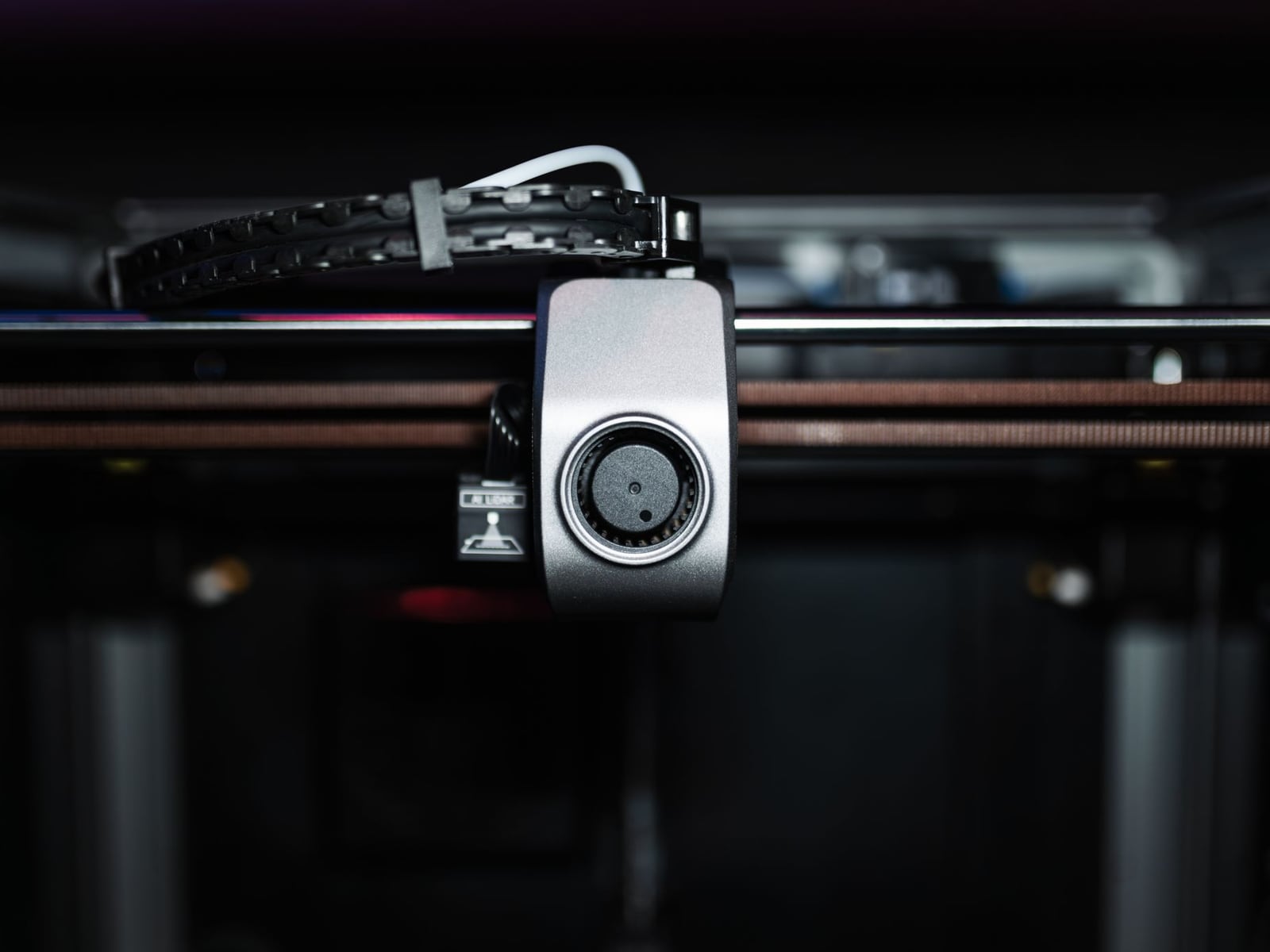
FDM technology works by extruding heated thermoplastic filament through a nozzle, building a part layer by layer. The primary advantage of this method is the wide availability of durable materials, allowing for the creation of practical, high-strength components at a relatively low cost. At Jubilantdrive, we employ industrial-grade equipment to maintain a strict dimensional tolerance of ±0.2mm, ensuring your design intent is faithfully reproduced.
FDM is the ideal choice for early-stage form verification, the creation of custom factory jigs, and functional prototypes requiring structural testing. From easy-to-use PLA for conceptual models to heat-resistant and robust ABS for engineering parts, we recommend the appropriate material based on your specific application. Operating from our Yokohama studio, our engineers perform rigorous data checks to minimize printing risks and ensure reliable delivery.
Our 4-Step FDM Production Process
Data Analysis & Optimization
We analyze your STL or STEP files to verify wall thickness and identify critical overhangs. We optimize support structure placement to enhance final part quality and reduce post-processing time.
Slicing & Material Selection
Based on whether you prioritize strength or aesthetics, we determine the layer height and infill density. We select the optimal material from PLA, PETG, or ABS and configure the print parameters.
Precision Layer Fabrication
Using our fleet of 12 printers, we begin the build process. We support maximum build sizes up to 300x300x400mm, maintaining stable thermal environments for consistent precision.
Support Removal & QC
Once printing is complete, we carefully remove support materials and verify dimensions against the original blueprints. After a final visual inspection, parts are securely packed for shipping.
Who Should Choose FDM Printing?
This service is specifically designed for engineers, industrial designers, and development teams with specific needs. First, it is perfect for those in the early stages of product development who need to "hold the part in their hand" to verify scale and ergonomics. Because FDM is fast and cost-effective, it supports an iterative design process where changes are made frequently.
Additionally, FDM is highly suited for creating specialized factory jigs, custom holders, and tools that require high rigidity and practical utility. It also handles large conceptual models or architectural base parts that would be prohibitively expensive or too large for resin-based (SLA) printing.
Workflow and Operation
We prioritize seamless communication from order to delivery. To start, please provide your data, preferred material, and quantity via our contact form. We will verify the data integrity and provide a detailed quote. Upon your approval, a prepayment of 50% of the total order value is required before we proceed to the fabrication stage.
During the printing process, we provide progress updates as needed. For complex geometries, we can send photos of the build in progress to ensure the orientation is correct. Every finished product undergoes a final quality check before being dispatched from our Yokohama facility.
Data Preparation Requirements
To ensure a successful print, we request data in STL or STEP formats. When exporting from CAD software, please ensure that the units are set to millimeters (mm). Be aware that wall thicknesses below 0.8mm may result in insufficient strength or printing failures.
If you are unsure how to prepare your files, please refer to our "Guide to Preparing Models for 3D Printing". If you only have sketches or hand-drawn blueprints, we can create the necessary digital files through our separate 3D Modeling service.
Deliverables and Final Output
You will receive the physical printed parts, securely packaged. Due to the nature of FDM technology, layer lines (stacking marks) will be visible on the surface; this is a standard characteristic of the process. If you require a perfectly smooth surface, we recommend adding our "Post-processing" service to your order.
If we performed the modeling for you, the final STL/STEP files will be provided upon full payment. This ensures you have the assets for future design iterations or mass production. Each delivery includes a brief report detailing the print settings used for your parts.
Lead Times and Scheduling
The standard lead time for prototypes is 3 to 5 business days after data finalization. By efficiently managing our 12 printers, we maintain a rapid response rate. However, very large parts requiring long print times or periods of high demand may affect this timeline.
For urgent requirements, we offer a "Priority Fee" (30% increase), which allows us to adjust our schedule to prioritize your project. Specific delivery dates will be provided during the quoting process to help you manage your project timeline.
Excluded Items (Non-Printable)
For safety and compliance reasons, we strictly decline the following: weapons or weapon components, medical implants or devices intended for direct internal human contact, and critical aerospace components that require legal certification.
We also refuse to print copies of models that infringe on third-party copyrights or trademarks, or data with unclear intellectual property rights. If a request violates these terms, the order will be cancelled immediately.
Pricing and Consumption Tax
FDM printing costs are primarily calculated based on the "amount of resin used (grams)" and the "total printing time." A base fee is applied, and the material unit price is added to determine the final cost. The minimum order value is 3,000 JPY (including tax).
All listed prices are calculated by adding the 10% 消費税 (Consumption Tax) to the net price. For B2B transactions, payment terms are within 30 days after the invoice is issued. For detailed contractual terms, please review our Terms of Service.
FDM Service Inclusions
- STL/STEP data integrity check and optimization
- Material selection based on application (PLA, PETG, ABS)
- High-precision FDM fabrication (up to 300x300x400mm)
- Removal of support structures and basic deburring
- Dimensional verification against design specs and quality inspection
- Secure packaging with cushioning materials for safe shipping
Pricing Plans
| Material Plan | Unit Price (Excl. Tax) | Unit Price (Incl. Tax) | Unit |
|---|---|---|---|
| Standard PLA / PETG | 136円 | 150円 | per 1g |
| High-strength ABS | 200円 | 220円 | per 1g |
Frequently Asked Questions
Are FDM printed parts strong enough for functional use?
Yes, sufficient strength can be achieved through proper material selection. ABS and PETG, in particular, offer excellent impact and heat resistance, making them suitable for functional jigs and prototype parts. However, since parts are weaker along the Z-axis (between layers), we will suggest the optimal print orientation to handle your specific stress loads.
Can the layer lines be removed from the surface?
By nature, FDM leaves fine ridges on the surface. To eliminate these, post-processing such as sanding, priming, and painting is required. We provide a professional "Post-processing" service for clients who prioritize a high-end visual finish.
What level of dimensional tolerance can you guarantee?
Our standard dimensional tolerance is ±0.2mm. Minor variations may occur due to material shrinkage and temperature fluctuations. If your project requires extreme precision in specific areas, please let us know in advance so we can advise on design margins.
For questions regarding FDM 3D printing or to request a specific quote, please use the contact form below. If you are considering other fabrication methods, please visit our Services Overview to explore options like SLA resin printing.